Maze has a three-plan structure. Users can sign up for a very-limited free plan in terms of features, self serve to upgrade to a medium Starter plan with a fraction of the features available on the Organization plan which unlocks the full potential of the platform, including advanced research types and premium leader features such as Interview Studies, advanced filters when hiring from our panel, and more.
Our data suggested that on the Free plan:
55%
of ICPs start by creating their own study
45%
don’t create a study
75%
of ICPs never get to a report as only 35% of those 55% who create a study, set it live and have a report generated and only 20% get to see the report.
Not getting to value
The above data essentially suggests very few ICPs who sign up for Maze on the free plan get to value.
Additionally
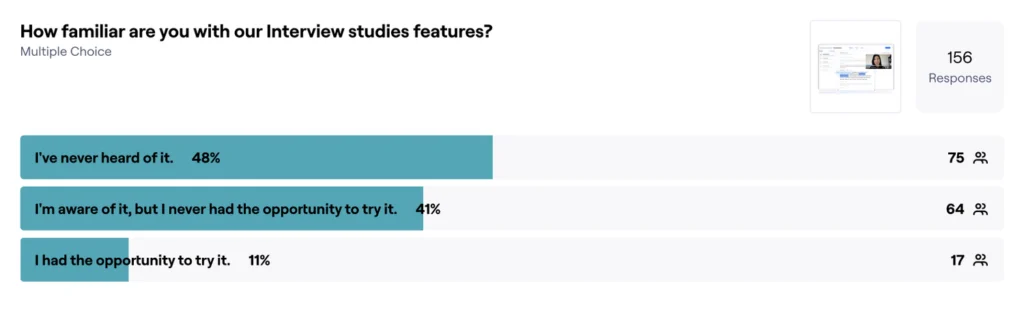
Users signing up to Maze to explore the tool had no visibility of core product-defining features, e.g. Interview studies, unless they upgraded to the Organization plan or spoke with sales as those were hidden from users on the free team
Free plan lacked any structured onboarding guidance.
Each product team would add sporadic coachmarks that appeared inconsistently in varying UI depending on the team’s needs. Users would end up with seeing several coachmarks at once which would cover the product UI causing confusion.
Users on the Free plan don’t unlock Maze’s full potential.
HYPOTHESIS
IF WE
Increase visibility of our Organization-plan features
Implement a freemium trial model which would allow users to see the Organization-plan features in action.
Introduce an onboarding experience which directs them from creating a study all the way to viewing and sharing a report.
we can increase PQL s and increase number or ICPs contacting sales & converting to our higher plans.
The goal was to create 40-50 leads per quarter from the self-serve experience across these three initiatives
Aiming for the experience on the Free Maze plan to help individuals and teams looking for a user research platform, understand the myriad of research use cases, that Maze can be used for.
HOW MIGHT WE
Showcase our premium features on Free
Or how can we cater for the 45% of our ICPs who sign up, but are not ready to build or set a study live.
However, Maze’s sign-up flow was generic and undifferentiated. It didn’t reflect the breadth of the product — only the bare minimum.
We redesigned it to do three things:
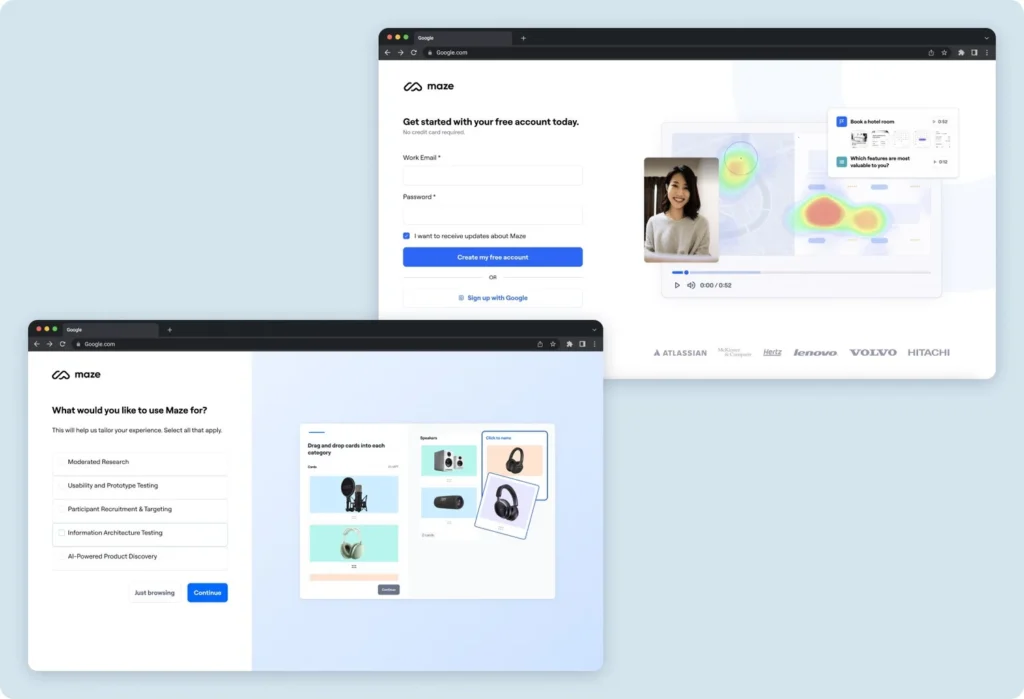
We improved sign-up by showcasing premium features with updated visuals and adding a use-case question to gauge user intent and premium interest.
Goals: Users immediately understood Maze offered far more than simple prototype tests & tracking interest in advanced use cases without friction to capture intent.
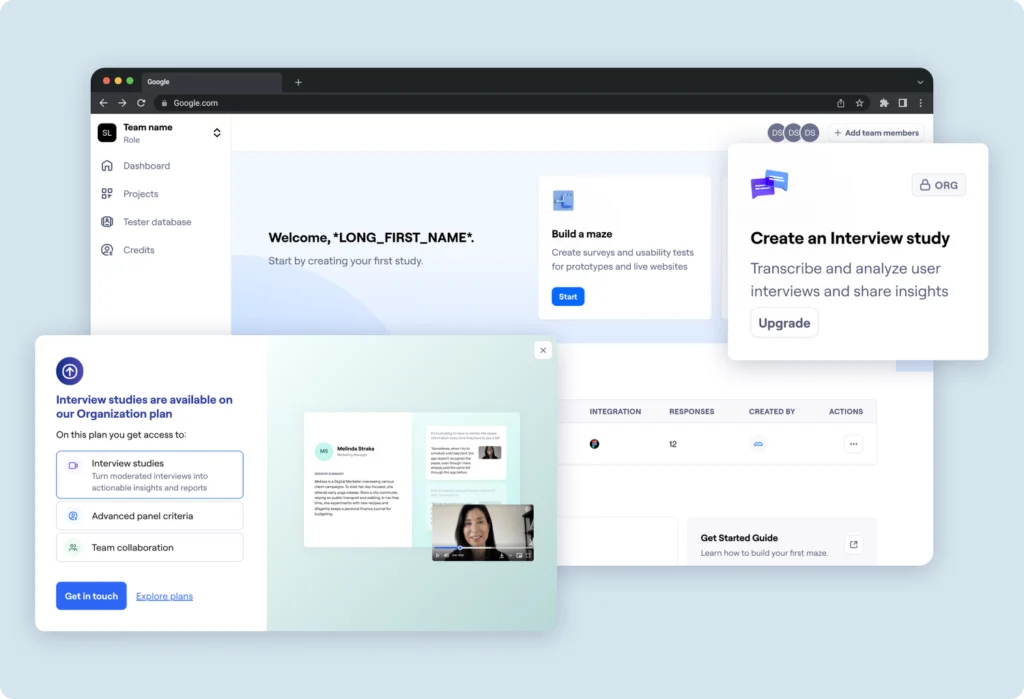
We highlighted features in-product with targeted upgrade prompts to track interest and measure conversion rates.
Goals: Do not hide features because they are not available – show and capture interest and intent.
We created a premium demo experiences that Free users could explore safely. Short, contained environments that allowed them to “touch” Maze’s most powerful features without needing: a prototype, participants, sessions, a study setup or complex preparation.
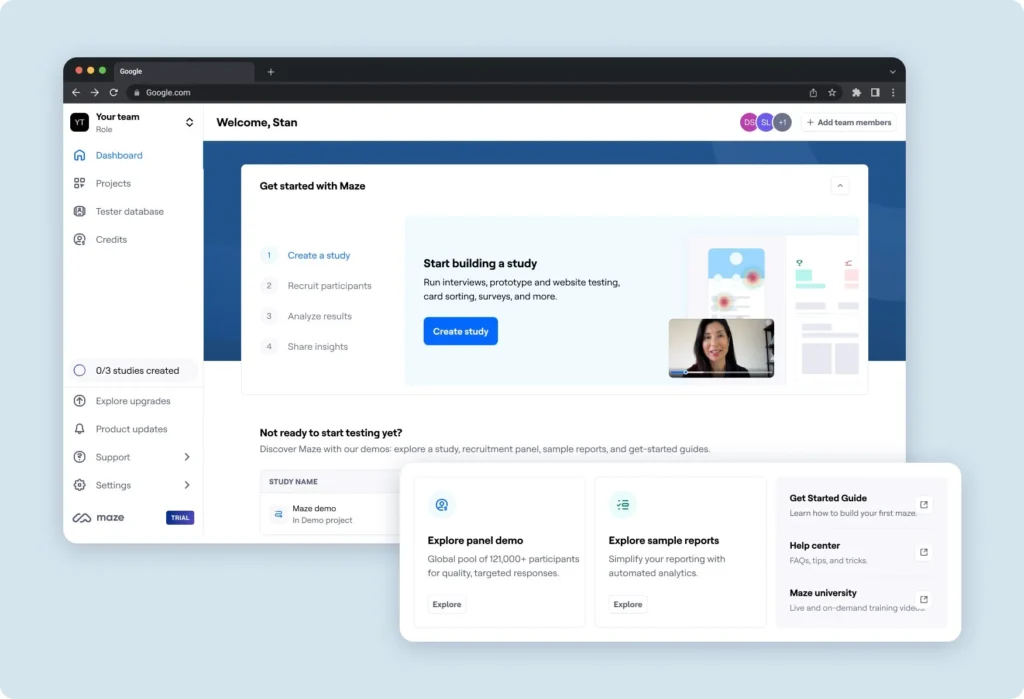
New sign-ups could explore new report and panel demos, experiencing participant recruitment and automated reports without setup.
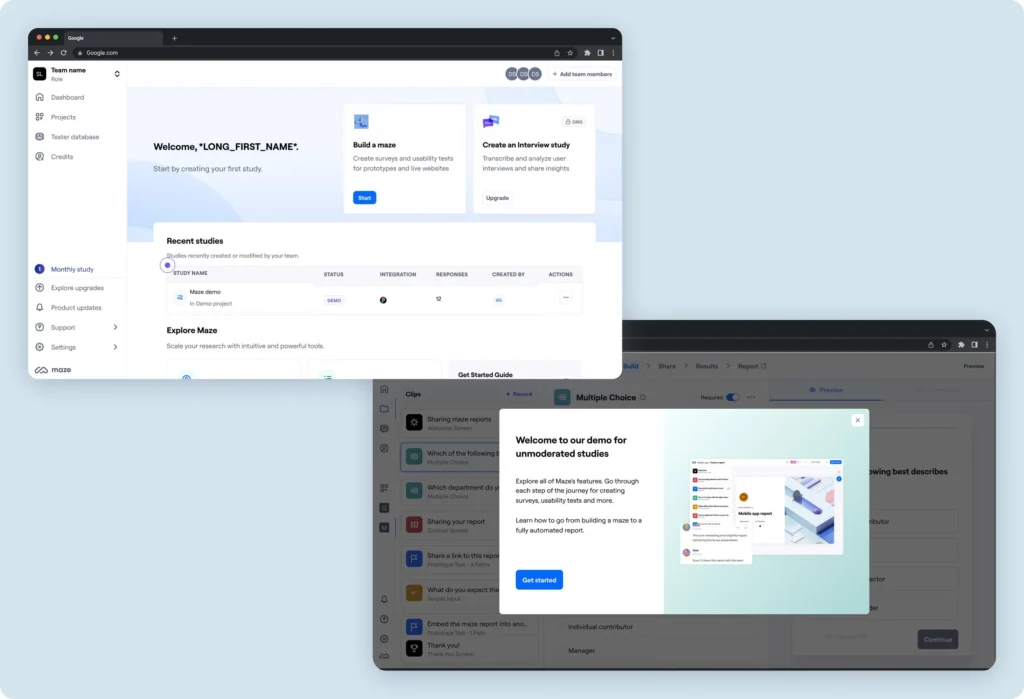
We introduced a demo for unmoderated studies, letting users experiment with features like card sorting, tree testing, and recruitment options while previewing automated reports.
Why
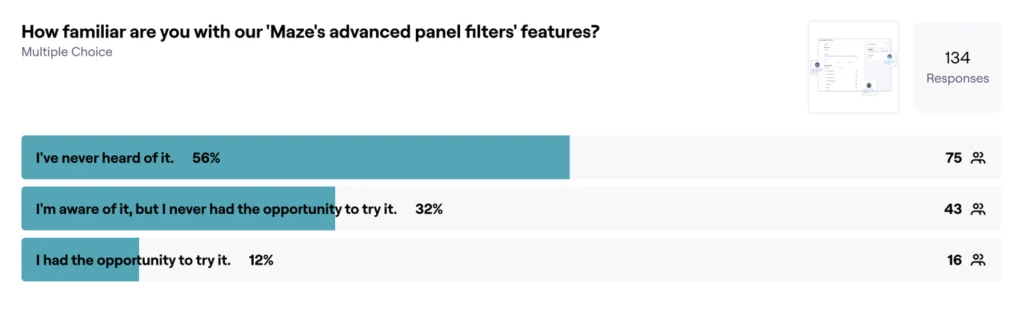
Interview studies and Advanced panel filters were top reasons why customers opted for the top tier plans.Although paywalled, users can now actually see that we offered interview studies.
Previously, users had to launch a study to access a report or explore our panel. Introducing demos allowed them to interact with a report without the full study setup.
The demo not only skipped the setup process but also let users explore premium features like card sorting and tree testing. It also provided a preview of the prototype block without requiring a prototype setup.
What happened & what we learned
The panel demo instantly became our best-performing paywall.
It confirmed that feature visibility directly influenced conversion.
Users loved the Sandbox — but not in the way we expected. They treated it as a reference tool, opening it repeatedly to understand Maze’s structure.
But conversion didn’t come from there.
This taught us something critical: Demos educate. Trials convert.
Data
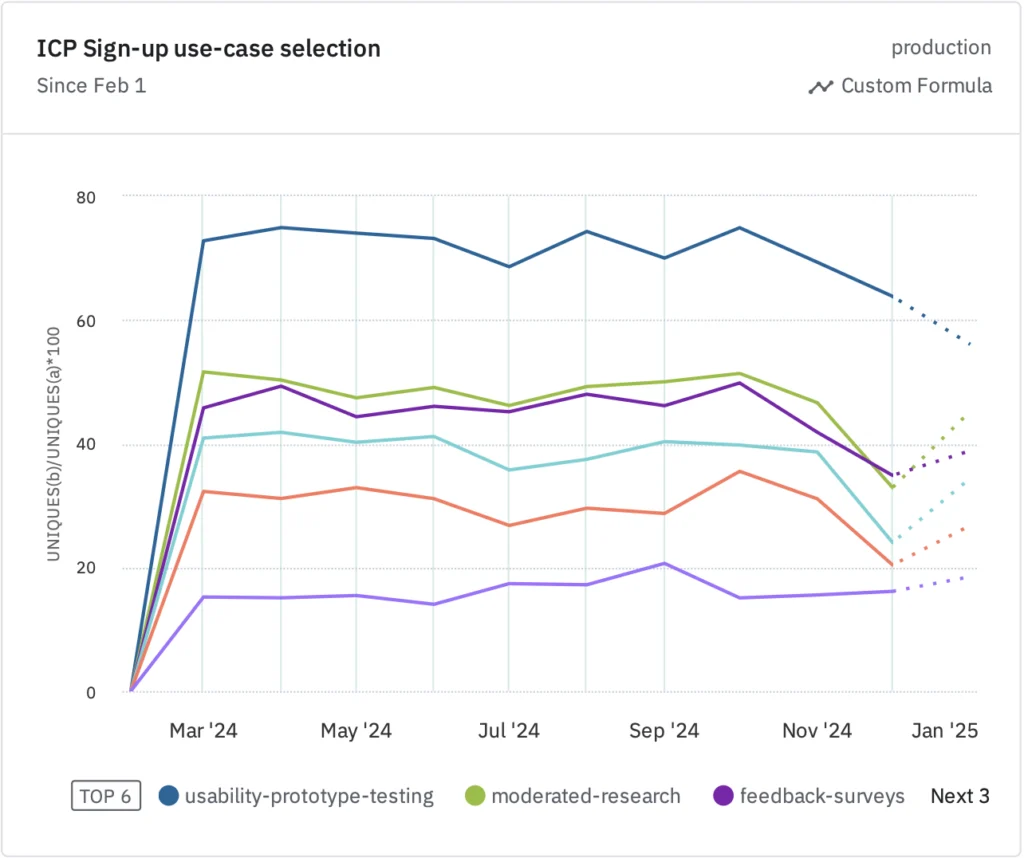
Track feature interest during sign-up via use case selection.
Result: Users primarily came to Maze for its well-known unmoderated prototype testing, reflecting its previous positioning as a rapid prototyping tool.
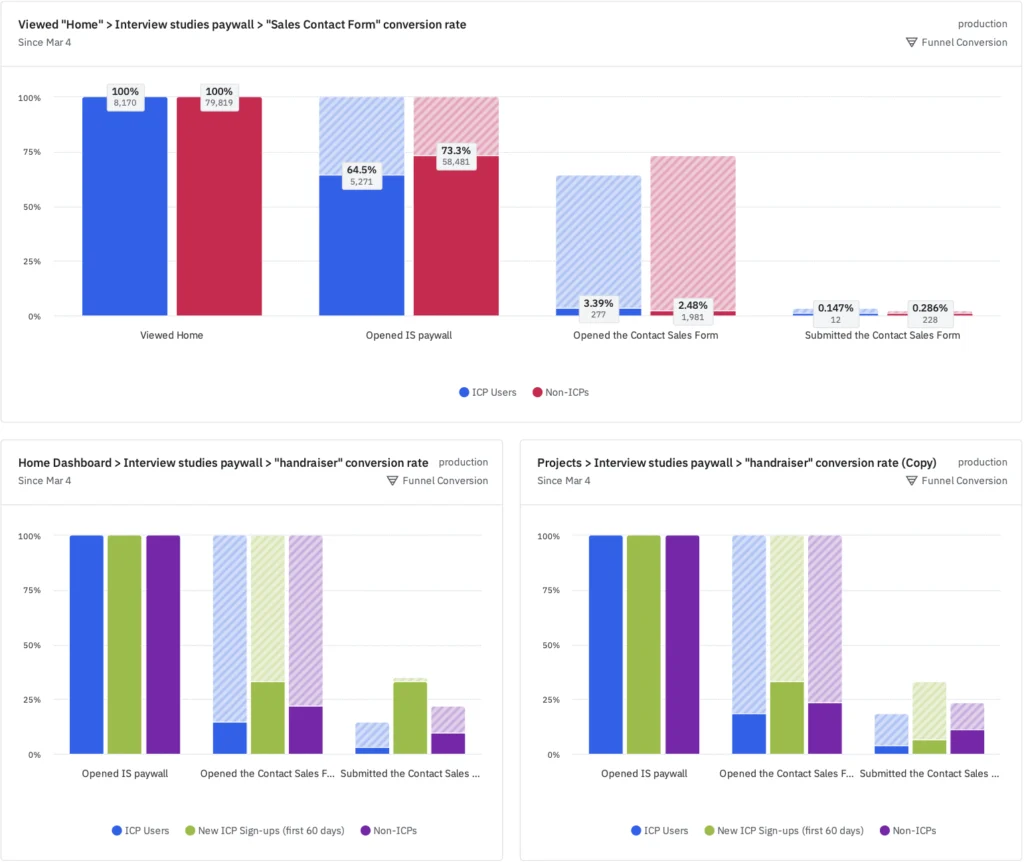
Monitor interactions with premium features like Interview studies and paywall engagement to gauge curiosity and upgrade intent.
Result: We could do further improvements to our paywalls to drive better conversion.
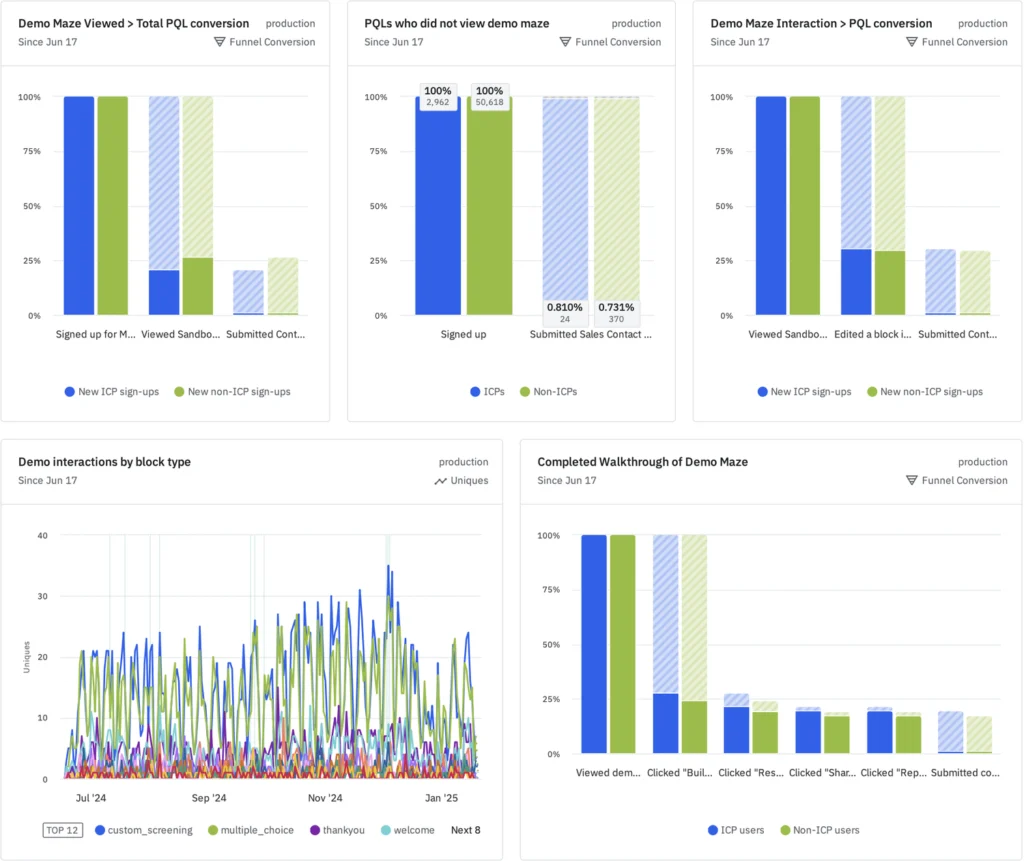
Measure sandbox engagement, including interaction rates, time spent, and interest in premium features like card sorting and tree testing.
Assess sandbox effectiveness by tracking conversions from exploration to actual study setup and sales inquiries.
Result: The demo study wasn’t driving conversions but was frequently referenced, suggesting users saw it as a reference tool. This raised doubts about investing in an interview study demo and supported moving directly to a trial.
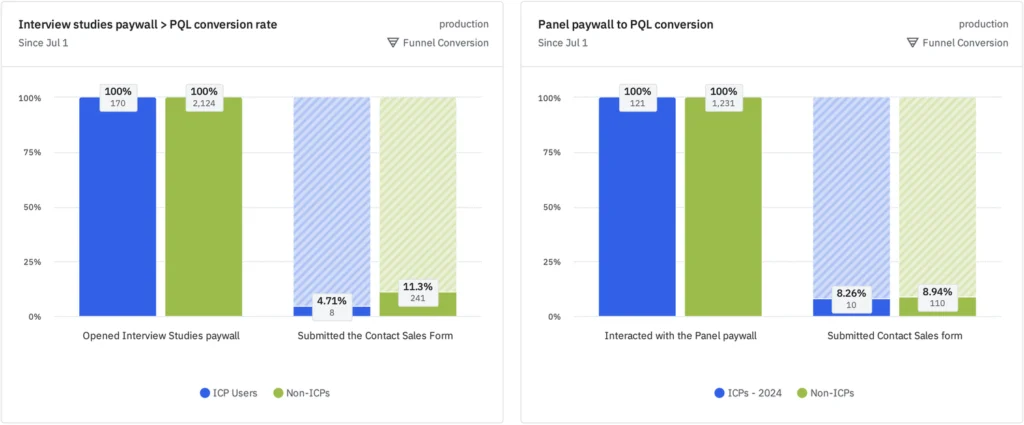
Evaluate report and panel demo engagement to understand user interest and its impact on sales conversions.
Result: The panel demo was our best-performing paywall, confirming our hypothesis that it’s a highly sought-after feature with strong conversion potential.
THE TRIAL
How might we
Allow users to experience our Organization-level features in real life scenarios
We opted for a reverse trial model.
Reverse trials let users experience the paid product upfront, then downgrade to freemium if they don’t convert. The trial period acts as a conversion trigger, while others delay purchasing at minimal cost. According to Elena Verna, this model sees a 15% trial-to-paid conversion, with another 25% continuing on the free tier.
Navigate them post sign-up to the AHA moment
ICPs are not getting to AHA even if they do set a study live.
We needed a way to prompt users to explore premium features, ensuring they didn’t miss out while guiding them to value at crucial points in their research journey.
WHERE WE LANDED
You have limited time to experience the full Maze — make it count. 30-day limit OR 3 study created whichever comes first.
ONBOARDING
Crafting a Guided Onboarding Journey
With trials, demos, and updated sign-up in place, we finally had the ecosystem to design a cohesive onboarding journey.
The journey needed to:
- guide users through Maze’s full workflow
- help them understand how studies come together
- guide them toward reports [AHA]
- surface premium features at the right moments
- explain Maze’s value in context, not abstraction
- remove the guesswork from exploring the product
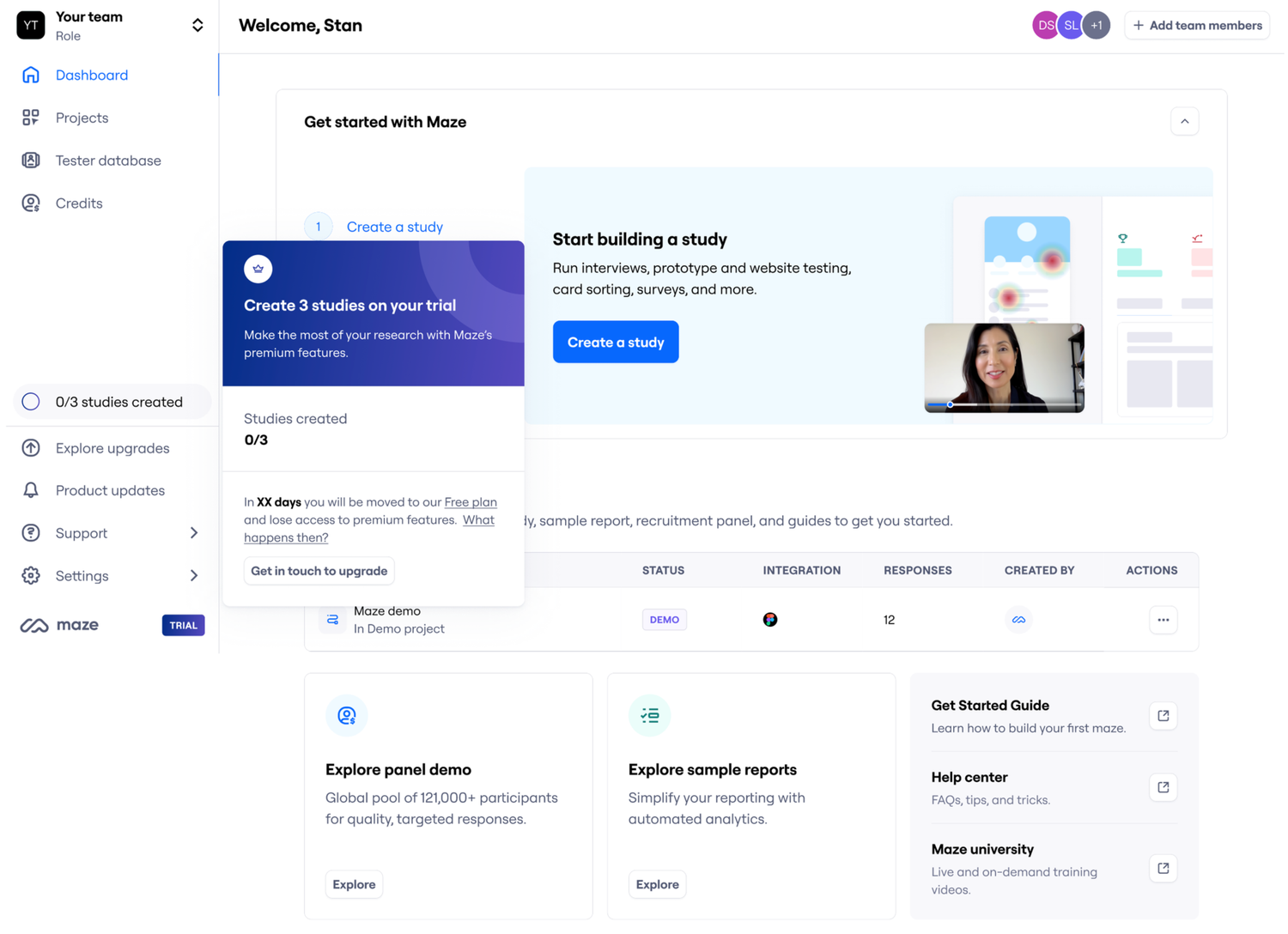
How the experience came together?
* I was working with already established design system, UI and brand language.
Adjustments were made to the sign-up flow assets.Including the addition of an extra use case screen to gather information about how users utilize Maze.
We redefined coachmarks to ensure they are consistent in placement, progressive in guidance, non-disruptive to the user experience, lightweight in UI design, and fully accessible. Essentially replacing years of disjointed, ad-hoc coachmarks created by different teams, consolidating them into a single, coherent onboarding framework.
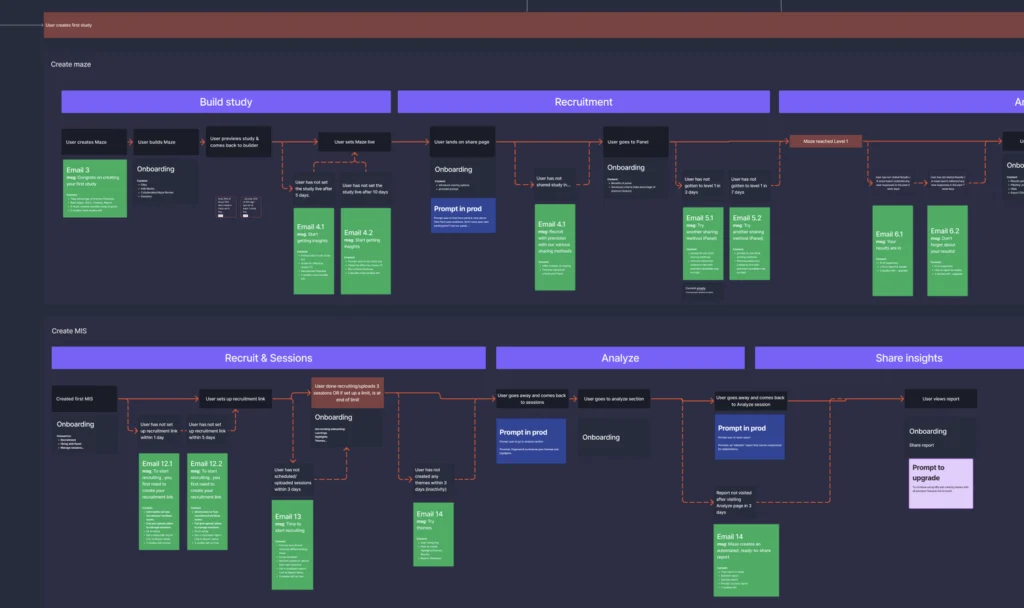
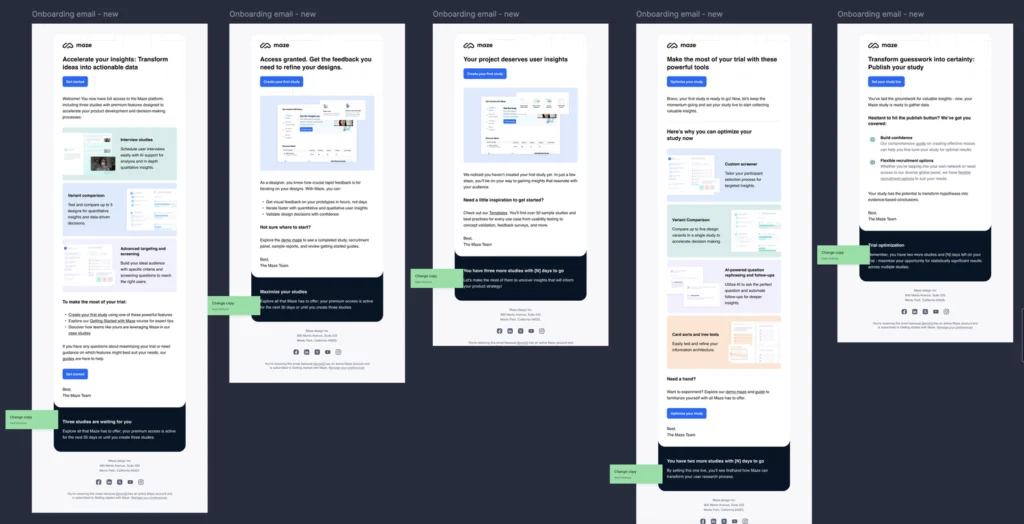
Alongside the PMMs, we carefully mapped out the entire journey of both in-product messaging and external communications, including all related emails.
Redesign of all onboarding communication, including copywriting, as well as the development and building of the emails involved in the process.
Newly introduced dashboard widget designed to follow the user’s journey throughout the process of creating their very first study. This widget is carefully tailored to accommodate both unmoderated and moderated studies, adjusting its features and guidance depending on which type the user decides to create initially.
Introduced detailed information on the trial, which could be easily accessed from anywhere during their entire journey.
Additionally, revamped the paywalls by providing more comprehensive and clear information regarding the value offered.
Measurement & impact
Early Intent
- use-case selection
- demo interactions
- feature curiosity signals
Sandbox Interaction
- feature-tip clicks
- hotspot interactions
- time spent
- navigation paths
Conversion Signals
- trial activation
- trial usage
- PQL triggers
- sales hand-raises
- upgrade attempts
- paywall interactions
Success
- Panel demo became our highest-performing paywall
- Trials generated deeper feature interaction than any demo
- Interview Studies consistently signaled highest curiosity
- Sign-up intent clarified premium potential
- Sandbox improved understanding of Maze’s structure
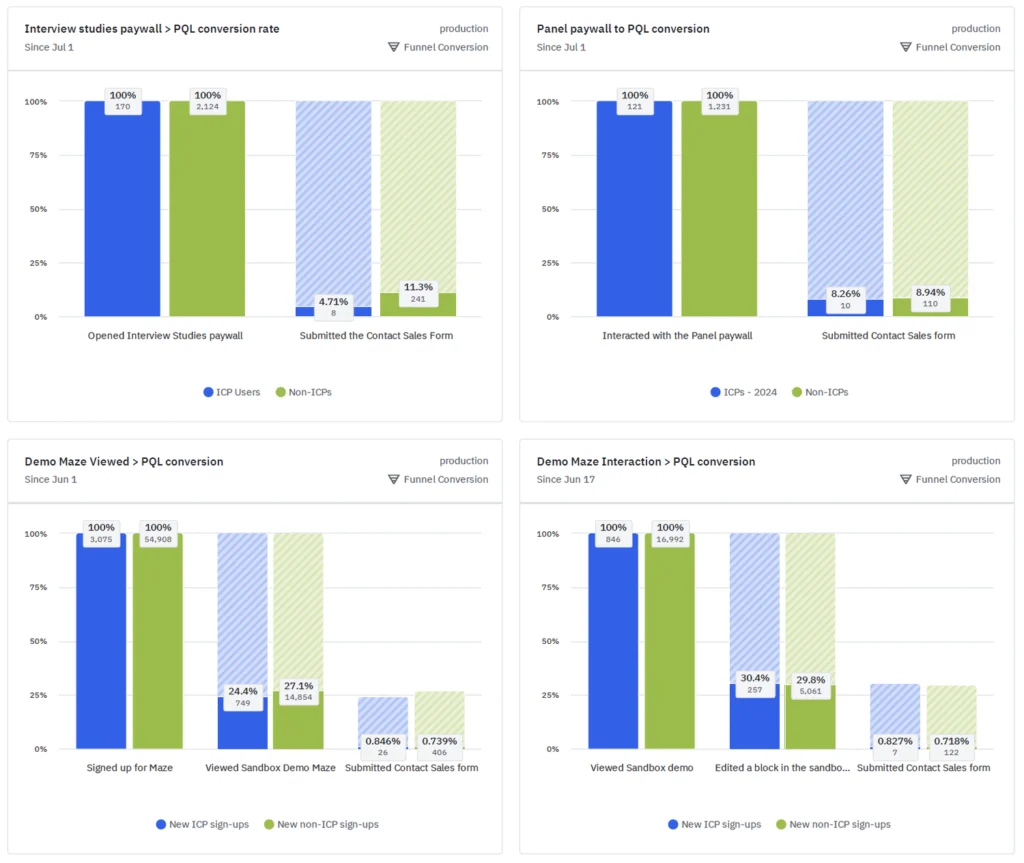
Reality check
- The Sandbox did not drive conversion on its own
- Users needed to experience Maze with their own data
- Reverse trials became the strongest path to value
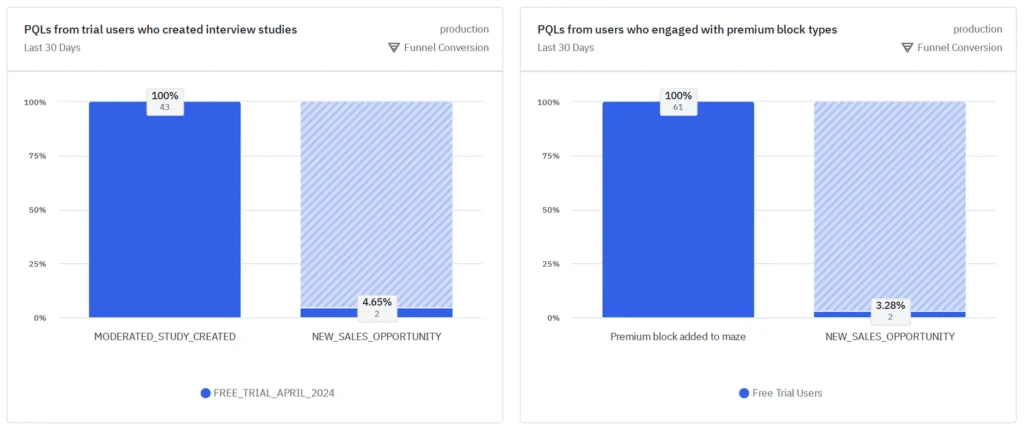
Conclusion
This project transformed Maze’s Free experience from a dead-end into a structured, educational, interactive pathway to value.
By improving sign-up, exposing premium features, creating a demo ecosystem, building a sandbox experience, and introducing a guided onboarding journey — and ultimately shifting to reverse trials — we gave users something Maze had never offered before:
A clear, guided path to understanding Maze’s full potential.
This work laid the foundations for Maze’s trial-first onboarding strategy and created new, reliable self-serve PQL channels that had not existed previously.